Why Google Traffic Doesn’t Become Customers
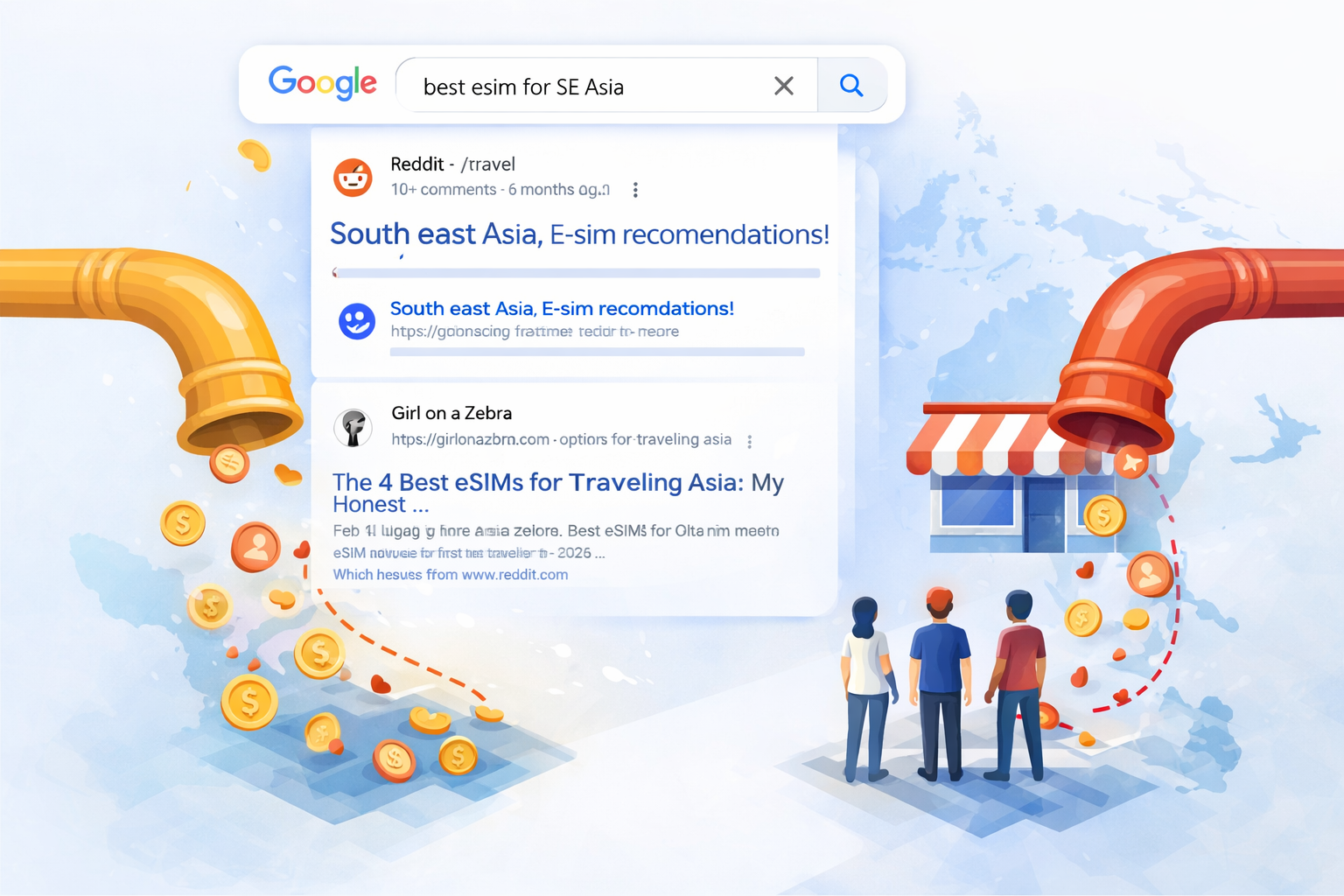
Many travel platforms receive thousands of visitors from Google every month. Search visibility improves, traffic grows, and dashboards show encouraging numbers. Yet revenue does not always follow.
The problem is rarely traffic alone. More often, something in the customer journey between search and the purchase breaks.
Understanding where that breakdown occurs requires looking at the entire journey rather than focusing only on traffic reports or surface-level performance metrics.
The questions below answer the most common version of that problem: why Google traffic doesn't become customers.
Why do some sites get a lot of organic traffic but very little revenue?
A: Traffic alone can’t generate revenue. What matters is whether the search experience matches the visitor’s intent.
When people arrive from Google expecting one thing but encounter something different on a web page, they leave before taking action.
This mismatch often occurs between the search query, what Google presents for that query, the page the user lands on, and the first meaningful action the page asks them to take. When any of these stages fall out of alignment, traffic grows but revenue stalls.
What Is the Search-to-Revenue Journey?
A: The search-to-revenue journey describes the path between a Google search and a completed purchase.
For example, a traveler might search for “best eSIM for Vietnam,” click a result, land on a page, and then decide whether to compare plans or make a purchase. If the page they land on does not immediately help them take their intended next step, the journey breaks before revenue occurs.
What is search intent and why does it matter?
A: Search intent refers to what the user is actually trying to accomplish when they type a query into Google.
For example, someone searching “what is an eSIM” is usually looking for information. Someone searching “best eSIM for Vietnam” is likely comparing providers. Someone searching “buy Vietnam eSIM” is much closer to purchasing.
If visitors arrive expecting to buy but instead receive an educational article. That’s a disconnect and it stops a conversion cold.
What is an entry page for organic traffic?
A: In this context, an entry page is the first page a user lands on from Google. It is not limited to homepages, advertising landing pages, or signup pages.
The entry page is the page Google sends visitors to for the query that brought them to the site. If someone searches ‘Bangkok to Phuket transport,’ the entry page might be a route page or booking page. That page becomes the gateway to revenue.
What is the first meaningful action?
A: The first meaningful action is actually the first step a visitor takes toward becoming a customer.
Examples include viewing available eSIM plans, checking ticket availability, comparing pricing options, or beginning a booking flow.
If the visitor cannot perform this step quickly, the customer journey pauses or comes to an end.
What are common examples of search-to-revenue misalignment?
A: Some of the most common issues include informational blog posts appearing in front of commercial searches, product pages ranking for research-stage queries, comparison searches leading to generic marketing pages, pricing hidden behind multiple clicks, or missing pages for high-intent commercial searches.
These misalignments create friction between what users expect and what they experience.
Why do travel platforms struggle with search intent alignment?
A: Travel platforms often serve multiple types of users: researchers planning trips, travelers comparing options, and customers ready to purchase.
Because of this, a single page sometimes attempts to serve too many intent types at once. A page might combine travel advice, product marketing, and booking options. When that happens, the experience becomes diluted for visitors who simply want to compare options and act.
How can companies identify where the customer journey breaks?
A: The most reliable way is to analyze four stages of the search experience: the query, the search results page, the entry page, and the first meaningful action.
What does a Search-to-Revenue diagnostic actually reveal?
A: This diagnostic examines the entire search experience to determine which search traffic segments can realistically generate revenue, where high-intent visitors encounter friction, and which pages are receiving purchase-ready traffic but failing to convert.
The outcome is a clear understanding of where revenue opportunities exist within existing search traffic. The diagnostic is accompanied by a 30-day roadmap that tells exactly what to fix first.
Who is this diagnostic for?
A: This diagnostic is not for companies that are still trying to generate traffic.
It is designed for companies that already receive organic visitors but suspect those visitors should be converting at a higher rate.
Is the search-to-revenue problem getting harder to solve?
A: Yes. And AI is making it more expensive to ignore.
Travel platforms investing in AI search visibility without fixing conversion friction aren't solving the problem. Instead, they're paying to send more people into a broken experience, faster.
I go deeper on this in Part 2—The Search-to-Revenue Gap: Why AI Discovery Makes It Worse.
What's the fastest way to find out if this is happening on my site?
A: The Search-to-Revenue Diagnostic — paired with a 30-day roadmap for what to fix first.